
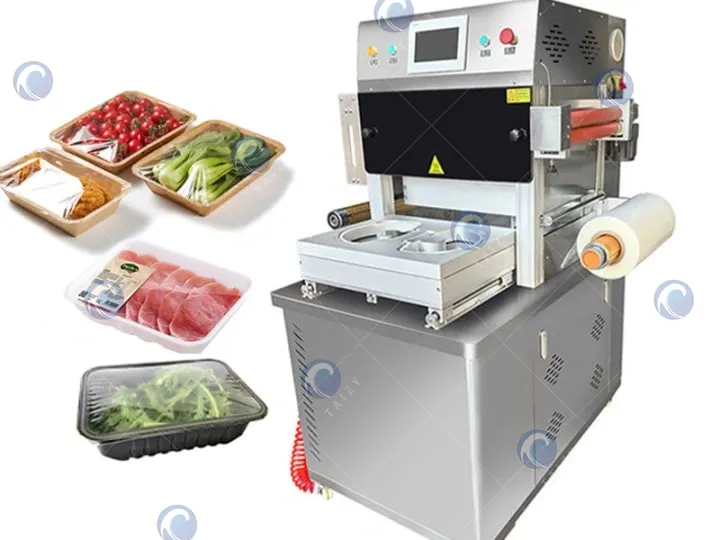
The map tray packaging machine effectively extends the shelf life of food products by vacuuming, injecting a protective gas mixture, and sealing the package. This modified atmosphere packaging machine is widely used across various sectors, including fresh meat, seafood, fruits and vegetables, cooked foods, ready-made meals, and baked goods.
Many customers inquire about pricing when looking to purchase this equipment; however, there is no standard, fixed price for MAP machines. The cost is directly influenced by factors such as the specific model, configuration, and production requirements.
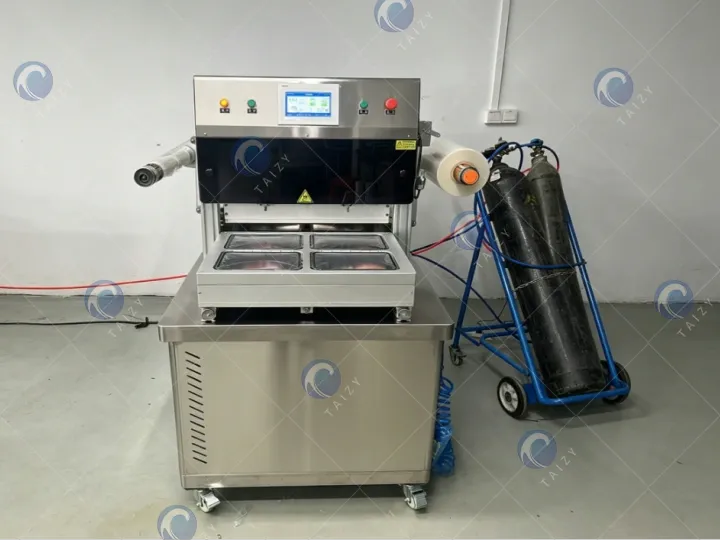
Equipment type determines the price range
The type of map tray packaging machine is one of the most direct factors influencing the price.
Small-scale food processing plants or retail outlets typically opt for tabletop or semi-automatic equipment.
In contrast, food processing enterprises, large central kitchens, and factories tend to prefer fully automatic MAP machines.
Generally, the available equipment types include:
- Tabletop MAP machines
- Semi-automatic MAP machines
- Fully automatic MAP machines
Enterprises should select the appropriate model based on their daily production volume rather than simply pursuing high-end specifications.
Packaging capacity directly influences cost
The map tray packaging machine designed for small-scale production may package only a few hundred trays per hour, while industrial models can process thousands of trays within the same period.
Higher-capacity equipment generally includes:
- Larger vacuum pumps
- Faster sealing systems
- More powerful control systems
- Higher production stability
Although high-speed modified atmosphere packaging machines require a larger initial investment, they often reduce labor costs and improve overall production efficiency over time.
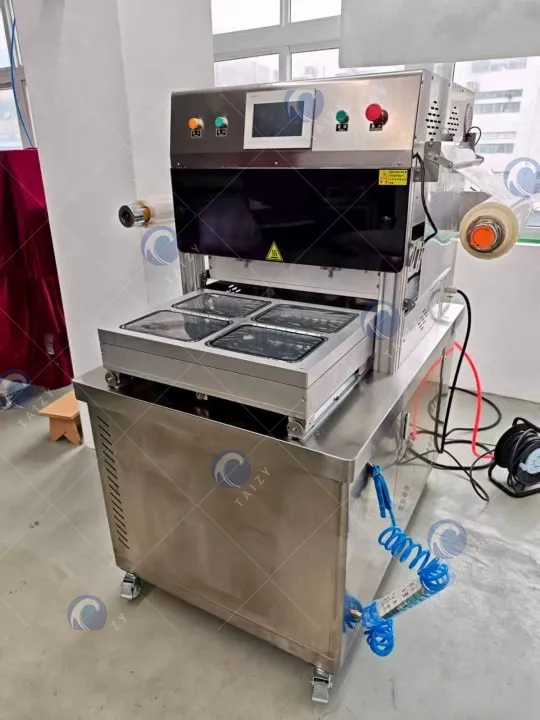
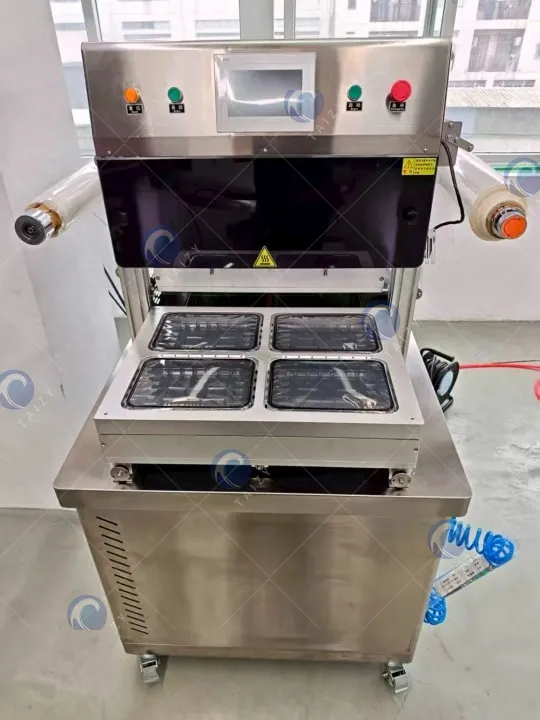
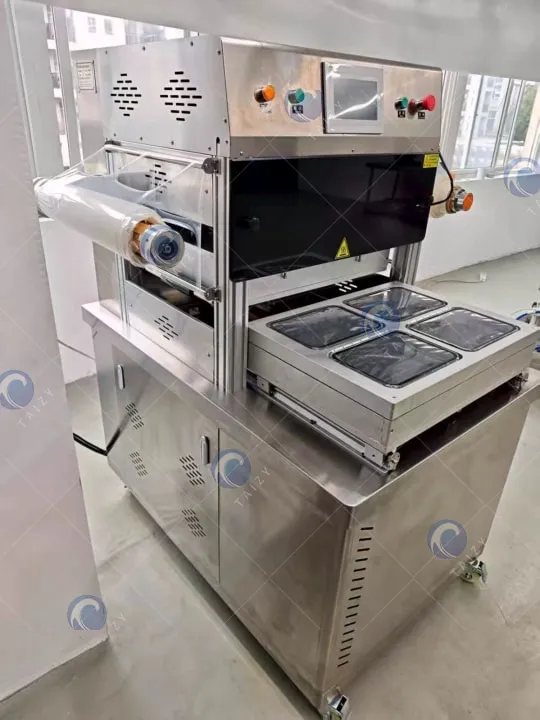
Gas mixing system affects both performance and price
A key advantage of the map tray packaging machine is the ability to use specific gas mixtures tailored to the preservation needs of different food products.
For example:
- Fresh meat typically requires a combination of oxygen, carbon dioxide, and nitrogen.
- Seafood products often utilize a mixture of carbon dioxide and nitrogen.
- Bakery products are primarily preserved using nitrogen.
If the equipment is equipped with a high-precision gas mixing system, the proportions of the various gases can be automatically controlled based on product requirements, thereby enhancing packaging consistency and preservation effectiveness.
Mold specifications & customization requirements affect cost
Packaging tray dimensions vary depending on the food product.
For instance, trays for meat, produce, ready-to-eat meals, and pre-prepared dishes differ significantly in terms of length, width, depth, and the number of compartments.
Consequently, many clients opt to have molds customized to their specific packaging requirements. The more complex the mold or the more specialized the specifications, the higher the manufacturing cost for the map tray packaging machine.
Conclusion!
The price of a map tray packaging machine is influenced by various factors, such as the equipment type, packaging speed, and gas mixing system; consequently, price quotes can vary significantly from one customer to another.
If you would like to know the specific pricing for a modified atmosphere packaging machine, please provide details regarding your product type, packaging dimensions, and production capacity requirements. Based on your actual production needs, we can recommend the appropriate equipment configuration and provide a detailed quotation.